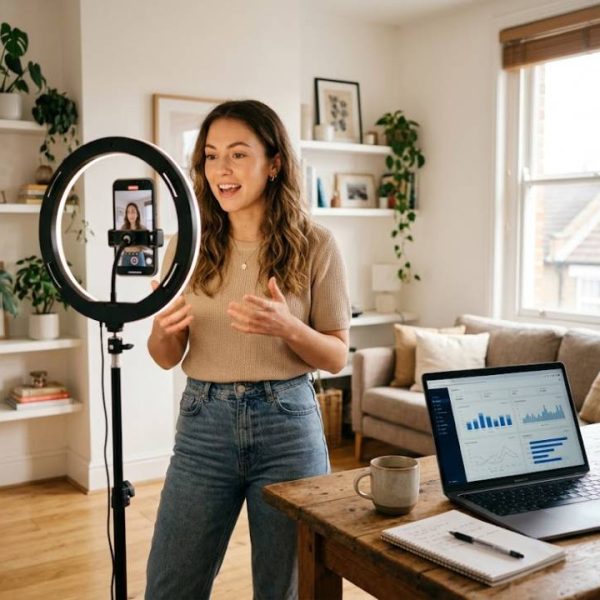
Look at the follower analytics of almost any mid-sized Instagram creator and you will notice something interesting. Even accounts that post only in English often have large audiences in Germany, France, Brazil, India or the Philippines. Many of those followers understand English well enough to scroll, but not well enough to comment, share or buy.
That gap is an opportunity. Creators and brands that speak to followers in their own language often see higher engagement, stronger loyalty and better-paying brand partnerships.
Why language matters on Instagram
Instagram is a visual platform, but words still do a lot of work. Captions explain the story, hooks in the first second of a Reel stop the scroll, and comments build community. When those words are in a follower's native language, the content feels personal rather than foreign.
Instagram has noticed too. The platform has introduced automatic caption translation, translated subtitles and AI-powered voice translation for Reels in selected languages. You can find official guidance on new features through Instagram's own newsroom. These tools help, but they rarely capture humour, slang or the personal tone that makes a creator stand out.
Three ways to go multilingual
Bilingual captions
The simplest approach is to write captions in two languages, usually English plus one main audience language. Keep the first lines short and catchy in both. This works well for travel, food and lifestyle creators with a strong second market.
Separate accounts
Larger creators and brands often run separate accounts per language or region, such as a main global account and local ones for Germany, France or Latin America. This allows fully adapted content, local hashtags and region-specific collaborations, but it requires more resources.
Subtitled Reels
Short videos with burned-in or auto-generated subtitles in several languages can reach far beyond a creator's home market. Many viewers watch without sound, so subtitles boost watch time even among native speakers.
Getting translation right
Influencer content is informal, fast and full of personality. Literal translation kills it. A joke that works in English can fall flat in German, and a casual tone in French needs the right choice between tu and vous. The goal is not translation but adaptation, sometimes called transcreation.
For French-speaking audiences in France, Belgium, Switzerland, Quebec or West Africa, creators and brands often rely on professional english to french translation services for campaign scripts, product descriptions and sponsored post copy. Germany is one of Europe's largest influencer marketing markets, with strict rules on labelling advertising. Brands entering it use german translation services not only for captions but also for contracts and disclosure wording, where small mistakes can create legal problems.
Scaling content without chaos
Once a creator or agency manages several languages, the workload grows quickly. Captions, story texts, link-in-bio pages, newsletters, product pages and media kits all need updating. Copying text between documents and chat threads soon becomes unmanageable.
Agencies running multilingual influencer campaigns increasingly centralise this work on a translation platform online. Copy is written once, sent to translators for each market, reviewed and approved in one place, then exported to scheduling tools. It also keeps brand terms and hashtags consistent across every account.
For creators who outgrow DIY workflows, partnering with a professional translation agency brings structure to multilingual content. Modern agencies pair CAT tools with a full translation management system to handle captions, subtitles and campaign copy at scale. Centralized glossaries keep brand voice consistent across languages and creators. The right partner turns translation from a bottleneck into a growth lever.
When influencer campaigns scale across regions, brands increasingly rely on dedicated localization services to adapt visuals, captions and calls to action to each market's culture rather than translating word for word. That includes local hashtag research, disclosure wording and review workflows that keep every language version on-brand. For teams running always-on multilingual content, this discipline turns scattered translations into a coherent global presence.
Hashtags and SEO by language
Hashtags do not translate directly. The most popular German travel hashtags are not simply English hashtags in German. Research local trends, check what competitors in each market use and mix broad and niche tags. Instagram search increasingly works like a search engine, so keywords in captions and alt text in the right language help content get discovered.
Community management
Engagement is a two-way street. If you post in Spanish, expect comments and messages in Spanish. Answering them, even briefly, builds trust. Many creators use translation tools for quick replies and bring in native speakers or community managers for sensitive conversations, complaints or brand-related questions.
Brand deals and media kits
Brands look closely at audience location and language when choosing creators. A media kit that shows strong engagement in specific countries, plus examples of localised content, can open doors to regional campaigns that pay well. Translating your media kit into the language of your target brands' marketing teams is a small investment with a clear payoff.
Measuring what works
Track engagement by language, not just overall. Compare saves, shares and comments on bilingual posts against English-only ones, and watch how follower growth changes in each target country over a few months. The numbers usually show quickly which languages deserve more investment.
Quick checklist
- Check your analytics to find your top audience countries and languages.
- Start with one additional language before expanding further.
- Adapt hooks and humour, do not translate them word for word.
- Use subtitles on every Reel.
- Research local hashtags and keywords.
- Follow advertising disclosure rules in each country.
- Reply to comments in the language they were written in.
The long game
Going multilingual will not double your followers overnight. It builds deeper relationships with audiences who were already there, waiting to be spoken to. On a platform built on connection, speaking someone's language is one of the strongest signals you can send.